The Council of Bishops of the Russian Orthodox Church Outside of Russia, the only free part of the Russian Church, looks with sorrow upon the sufferings to which the faithful within the boundaries of the Soviet Union are subjected. To the open persecutions of the atheistic authorities, which set themselves the goal of destroying every religion, are added also temptations from false brethren.
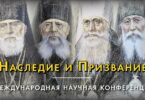
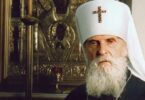
In 1927, when the late Metropolitan of Nizhnii Novgorod Sergii, who styled himself the Moscow Patriarch, issued his well-known declaration, the senior bishops of the Russian Church, including those indicated by Patriarch Tikhon in his testament for the temporary leadership of the Russian Church, did not agree with him, seeing the ruinous nature for Orthodox souls of that new course along which he led the Church, contrary to the instructions of Metropolitan Peter of Krutitsy. The names of Metropolitans Peter, Kirill, Arsenii, Iosif, Archbishop Serafim of Uglich, and many other hierarchs, clergy, and laypeople will enter the history of the Church on a par with the most renowned confessors of Orthodoxy in the face of persecutions, impiety, and heresy.
The free part of the Russian Church, located outside the borders of the USSR, is with soul and heart together with the confessors of the faith, whom anti-religious manuals call “true Orthodox Christians,” and whom in everyday usage are often called the “Catacomb Church,” since they are forced to hide from the civil authorities in a manner similar to how believers hid in the catacombs in the first centuries of Christianity. The Council of Bishops is conscious of its spiritual unity with them, and the Russian Church Abroad always prays for all those who, under conditions of persecution, in one way or another preserve the truth and “do not submit to a foreign yoke with unbelievers,” realizing that there is nothing in common between light and darkness, and no agreement between Christ and Belial (II Cor. 6:14–15).
The free part of the Russian Church, besides prayer, also strives to help its brethren on the homeland who suffer for the Faith by consistently attempting to reveal to the world the true condition of the Church in the Soviet Union, exposing the falsehood about its supposed well-being that is spread abroad by false pastors who travel there, who glorify the persecutors and humiliate the persecuted.
In those grievous circumstances which our brethren in the Soviet Union are compelled to endure, consolation for us is found in the example of the first centuries of Christianity, when the persecutors of Christ likewise sought physically to destroy the Holy Church. But we remember the encouraging words of the Savior: “Fear not, little flock” (Luke 12:32). We also remember the encouraging words of the Savior for those whom the Lord will judge worthy to be on this earth in the final days of its existence: “then look up and lift up your heads, because your redemption draws near” (Luke 21:28).