Introduction
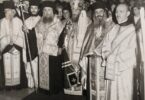
The diaries of Archimandrite Seraphim (Ivanov) [1] later Archbishop of Chicago, Detroit and Middle America (1897-1987). contain abundant information that can further a better understanding of the history of the Brotherhood of St. Job of Pochaev. This Brotherhood was established in 1923 by the Russian monastic missionary priest, Archimandrite Vitaly (Maximenko), [2] later Archbishop of Eastern America and Jersey City, Abbot of Holy Trinity Monastery and Rector of Holy Trinity Seminary (1873-1960). as a mission to inhabitants of the Carpathian Mountains. The Brotherhood went on to print religious literature for the entire Russian diaspora and even for Russia itself. With only about 30 members of the Brotherhood this small monastery had a disproportionately large influence on the Russian Church in the diaspora. Many future bishops and prominent clergymen started there, and the printing and clergy education work of the monks aided the Church throughout the emigration and even within the Soviet Union. Between 1934 and 1946 Archimandrite Seraphim acted as locum tenens for Father Vitaly after the latter was consecrated a bishop and sent to North America. Father Seraphim then led the small group of monastics and attached laity, first in the remote village of Ladomirová and later in New York State. Between Ladomirová and Jordanville the Brotherhood came into contact with and was temporarily attached to the Russian Liberation Army (ROA) [3] in Russian: Russkaya osvoboditel’naya armiya, hence the abbreviation ROA. of General A. A. Vlasov (d. 1946). In Father Seraphim’s 1944-1945 diary, he records many important and insightful details that shed light on the day-to-day life of the Brotherhood in various places, the intentions of the Brotherhood and himself at various moments, as well as his own opinions on issues and events. He also writes in detail about his own personal spiritual struggles and challenges, as well as more-or-less random notes about his life which one might expect to find in any diary. This Russian-language document, along with several other similar diaries by Father Seraphim, is preserved in the archives of Holy Trinity Monastery, Jordanville, [4] Holy Trinity Orthodox Seminary Archive. Archbishop Seraphim (Ivanov) Papers (Unprocessed). Box 3, «Дневникъ отъ Пасхи 1944 года» (Diary from Pascha 1944), October 27. and seemingly has been overlooked as a potential source for writing about the Brotherhood of St. Job of Pochaev. This paper aims to introduce this source and explore how it impacts our understanding of the relationship between the Brotherhood of St. Job of Pochaev and the Russian Liberation Army.
Overview of the Diary
Although the range of topics discussed in Father Seraphim’s diary is quite broad, the frequent mentions of General Vlasov and his ROA are especially of interest since they offer direct first-person insight into and explanation of the actions of the Brotherhood in 1944 and early 1945. The relationship of the Russian Orthodox Church Outside of Russia (ROCOR) and the ROA has always been a heavily discussed topic, plagued by frequent polemicizing and exaggeration. Since the ROA fought alongside the Third Reich’s forces for the sake of removing the Bolsheviks from power in Russia, there is no shortage of emotion and resulting inaccuracy in the handling of this question. The Brotherhood was indeed actively involved in the life and work of Vlasov’s movement, at least to some degree. Not only did members of Brotherhood serve the ROA as clergy, but the they “significantly aided” the work of the print-shop at the ROA propagandist school in Dabendorf. [5]М. В. Шкаровский, “Русская Православная Церковь и власовское движение,” Вестник Церковной Истории, no. 4 (2006): … Continue reading Father Seraphim’s diary offers insights into his personal motivations as well as the Brotherhood’s circumstances that led to involvement with the ROA.
The following excerpts from the diary were transcribed and translated for this paper, which is aimed at taking the first step toward adding this information to the existing body of historical knowledge on the topic.
Entries from the Diary
The first mention of General A. A. Vlasov in Fr. Seraphim’s 1944-45 diary is an entry on October 27, 1944. By that time, the group of 30 or so men had left the monastery in Ladomirová and gone west to Bratislava, due to the advancing front of the Soviet army. Vlasov is mentioned in passing:
Again I visited Vienna, where, besides meeting with M[etropolitan] Anastassy [6] Metropolitan Anastassy (Gribanovsky), First Hierarch of the Russian Orthodox Church Outside of Russia (1873-1965). and Vladyka Seraphim.[7] Later Metropolitan Seraphim (Lade) of Central Europe (1883-1950). I also saw Fr. Igor. First, it was maintained that we should be attached to the synod, but then we reconsidered, because Vlasov’s movement will not be what we want. So, if we receive visas we will go to Switzerland. All this isn’t simple.
From this it is evident that Fr. Seraphim and the Brotherhood considered the option of being attached to the ROA but at least temporarily decided against it in favor of an option involving moving to Switzerland. The Brotherhood attempted to follow through with this option but was not initially successful. Fr. Seraphim records:
On Monday, it became known that we have been issued 15 visas for Switzerland. Now the German transit visas [8] To get to Switzerland the Brotherhood needed to pass through German territory. This proved to be the factor that kept the Brotherhood from moving to Geneva as they had planned. are the question at hand. This is not a simple matter, but I believe that the Lord will not leave us. It is only a matter of time. The visas are valid until January 1 and can be extended. […] Lord help us get out to Switzerland. We are very sinful and unworthy people and we feel shame before others, but still, we are able to and wish to labor for the benefit of the soul, for which we have both the strength and skills required thanks to the solidly formed brotherhood. [9] Diary from Pascha 1944, Saturday 4/XI 1944
A primary motivation for moving to Switzerland seems to have been the possibility of resuming publishing work. When evacuating from Ladomirová to Bratislava the Brotherhood had taken along everything from the type for typesetting to the bookkeeping files so that they could resume their mission as soon as possible in the new location. [10]Т. А. Богданова, А. К. Климентьев, Матерiалы к исторiи типографскаго иноческаго братства Преподобнаго Iова … Continue reading They seem not to have been able to do so in Bratislava but explored options elsewhere. On October 28, 1944, the Brotherhood’s Spiritual Council weighed the option of opening a print-shop under the ROA and gave directives to proceed with bringing the matter to the necessary ecclesiastical authorities. [11] Матерiалы к исторiи, 12. On October 31st Fr. Seraphim wrote in his diary:
I ask and I pray: Help us get out sooner to Geneva, where loving people are waiting for us, where it will be easier to keep all of our holy items, and where we might find the possibility of working, while here we are cooking in our own juice [12] A Russian expression meaning that the subject is isolated from external influences, cut off, or uninvolved. and don’t know how to act toward Fr. Michael who is acting unbecomingly. [13] Diary from Pascha 1944, October 31.
As the Brotherhood waited for the visas, General Vlasov launched his famous “Prague Manifesto” which called for the overthrow of Stalin and the establishment of a Nazi-allied government in Russia. Father Seraphim reflected on this in the diary entry for November 15:
19 days are left till the Swiss visas expire. We still don’t have the transit visas. Today Vlasov’s long-awaited manifesto appeared in the newspapers. Alas, not a word about faith and the Church is to be found therein. Hence, I remain convinced that we should go to Switzerland, since from there we can always move further, and we have a more solid position there for talking with the Germans. Besides, there we can launch a sizeable effort for the good of Russia and against Bolshevism. [14] Diary from Pascha 1944, November 15.
Although Fr. Seraphim was skeptical of the ROA leadership for neglecting to mention Orthodox Christianity and God, he was still expressly anti-Bolshevik in his leaning. The Brotherhood had long been publishing materials aimed against the Bolshevik regime, and Fr. Seraphim saw this as a way for him to oppose the Bolsheviks in his position as a monastic. The Brotherhood saw potential in using Vlasov’s ROA as a framework to continue their work which, at least to Fr. Seraphim, included fighting Bolshevism with the written word. One day later Fr. Seraphim further reflected on the manifesto and Vlasov’s movement:
We still don’t have the transit visas and there is a lower chance of obtaining them now due to Vlasov’s manifesto. [15] Vlasov’s Prague Manifesto was a disappointment to the leadership of the Third Reich because it contradicted certain Nazi racial and ideological principles and espoused Russian nationalism. Yesterday I listened to his entire speech and manifesto on the radio. Not a word about God. In the 11th point along with other freedoms he advocates freedom of religion. Although the hymn “How Glorious Is Our Lord in Zion” I don’t know whether it was only the motif or the words as well. [16] “How Glorious Is Our Lord in Zion,” a composition by composer Dmitry Bortniansky, became the official ROA anthem. I now pray like this: “show me the way, that I should walk in, for I lift up my soul unto thee.” [17] Here Father Seraphim cites Psalm 142 (143):8. Still, on the human level I still would like to go to Switzerland, get settled there, look around and then already make a free decision about whether we should return to Germany to Vlasov or stay and wait for the end of the war there. One way or another, it will be far harder for the Bolsheviks to win the war now. Everything depends on the Germans. Will Vlasov be merely a figure or will they take the matter seriously. I think that Vlasov, like obotnik [?], [18] This name or word is unclear in the manuscript. It looks like “оботникъ.” but this gives no further insight. will be a temporary leader. Then a German leader will appear, first of all a believer and morally unstained. Only then can the true renaissance of Russia begin, and later its transformation into Holy Russia. [19] Diary from Pascha 1944, November 16.
Clearly Fr. Seraphim had high hopes for the “rebirth” of Russia, but he did not see Vlasov as an ideal leader for the movement or as the one who would bring that renaissance and the return of Holy Russia. In the meantime, the option of moving to Geneva became less likely:
The request for transit visas was denied, but in a truly miraculous way I was able to go to Vienna for one day, meet M[etropolitan] Seraphim, and talk him into renewing the plea for the visas. The die is cast. If they don’t give us visas for Switzerland we will go to Berlin. For that we already have visas. It wasn’t easy with the Metropolitan. I had to fall to his feet. For this cause I am ready for even more self-abasement. Humility never did anyone any harm. Vladyka’s meeting with Vlasov was interesting. Instead of half an hour it continued for two hours and ended with Vlasov approaching for a blessing with the words: “Christ is Risen” and thrice kissing [20] This is referring to the Russian triple-cheek kiss that is practiced as a part of a cordial greeting especially in Orthodox Christian circles. both Vladykas. [21] Diary from Pascha 1944, November 28.
From the lengths to which Fr. Seraphim went to talk Metropolitan Seraphim into restarting the process for obtaining visas, one can see the strong desire Fr. Seraphim had to go through with the Geneva option. In the next entry this strong desire is explained by the fact that Fr. Seraphim has serious doubts as to Vlasov’s success:
Tomorrow our fate will be decided in Berlin if Vladyka goes there. I would give a horse for us to only get the miserable transit visa, for I have little faith in Vlasov’s movement since they are acting without God’s blessing. [22] Diary from Pascha 1944, November 29.
Despite not wanting to, the Brotherhood was coerced by circumstances to travel to Germany. On December 10th Fr. Seraphim wrote:
We still don’t have the transit visas and probably will not receive them. We have decided on traveling to Germany. Today I will ask the police attaché for two railroad cars. We will liquidate the metochion here. [23] The term metochion (translation from the Russian подворье [podvorie]) refers in the Russian Orthodox tradition to a parish representation (or dependency) of a monastery or a primate. On the fronts the situation is noticeably worse. God grant us to leave successfully. In Berlin things aren’t all peachy either, but we have to go. Maybe it will be possible to solicit something there in person. The Bolsheviks are approximately 150 kilometers from us to the south. In the east they are by Prešov. [24] Diary from Pascha 1944, 10 December.
In any case, the Brotherhood needed to leave Bratislava due to the advancing front and the threat of capture by the Red Army forces. The Brotherhood had good reason to be apprehensive about such a threat since they had positioned themselves as anti-Bolshevik through their publications, which included the celebration of the German invasion of the USSR as a step toward Russia’s liberation from the godless regime. On December 14th there was even more clarity as to travel plans:
Today our fate was decided. M[etropolitan] Anastassy did not bless us to move to Switzerland. May God’s will be upon this. It is after all better if Vlasov’s undertaking [develops]. [25]At this point in the manuscript “разовоется” seems to be written, which in and of itself has no meaning in everyday Russian. If one were to conclude that it is a misspelling of … Continue reading For now though, the Brotherhood is on the eve of evacuation. This means we need to look for a space in Berlin. [26] Diary from Pascha 1944, December 14.
With the ROA in Germany
For better or for worse, the Brotherhood was in the same country as the ROA and seemed to be on course for working with the latter. On December 27th Fr. Seraphim reflected on his recent meetings with Krasnov [27]P. N. Krasnov (d. 1947, executed by the Soviets), a Cossack ataman active in the German Reich. He was an avid anti-Bolshevik, but he advocated a more complete uprooting of everything that was built … Continue reading and Vlasov:
I am returning home. Was the trip successful? Relatively. I saw Krasnov and visited Vlasov twice. Krasnov has gone totally insane. He considers Russia’s resurrection to be a lost cause and at least 50 years away. Germany is destroying the enemy with a new weapon in the west and then in the east. It will take Ukraine and the Caucasus and make Russia “Muscovy” or will leave Bolshevism be. He doesn’t believe Vlasov. Terrible confusion. I haven’t objected for now. We also discussed assigning Bishop Afanasy for the Cossacks.
The first time I was at Vlasov’s with Yuri Pavlovich. Vlasov talked primarily. He warmly reminisced about the seminary, talked about the necessity for the Church to be united. We recommended that he take a leading role and recognize only [?] M[etropolitan] Anastassy. [28]Probably alluding to the split that occurred in the migré Russian Orthodox community over who was meant to head the diaspora Church. Some favored Metropolitan Evlogy (Georgievsky) in Paris, while … Continue reading Then others, seeing that there is no way out, will accept union sooner.
The second time I was alone with Vlasov and even had tea with him. He reminisced a lot about how he lived in the Pechersk [Ascension Monastery] in Nizhny Novgorod with the seminary that was there in 1914-15. He was glad to hear of our plans to settle near him and promised his assistance, but he himself doesn’t have many possibilities since the Germans aren’t giving him anything for now. There is one division, and even they are without rifles and military machinery. Yes, the stubbornness of the Germans is tragic, but we have no other option and we can only arm ourselves with patience. [29] Diary from Pascha 1944, December 27.
Despite having his doubts about Vlasov, Fr. Seraphim was willing to work with him and preferred his views to Krasnov’s more radical and less hopeful opinions. The Brotherhood simply needed a place and context to continue its service to the Church. By April 15, 1945, at least some of the brothers were spiritually ministering to the ROA forces. The following entry also shows Vlasov’s active involvement in the arrangement of matters for the Brotherhood:
The first liturgy in the division’s church. Berlin passed by like a dream. We arrived on January 5th. We spent the first night in the church. Then in soldiers’ barracks. Christmas was spiritually wonderful, but we celebrated the end of the fast with coffee and salo. [30] Salo is a European (especially Slavic) food consisting of salt-cured slabs of pork fat, sometimes with skin and some layers of meat. Gradually we began getting settled. We made 3 rooms on the 6th livable. And then we had to leave. Thanks to Vlasov’s help we occupied a separate railroad car and arrived in Müsingen with one layover, today marks a week since we are here. [31] Diary from Pascha 1944, February 15.
In the context of ministering to the ROA forces the Brotherhood relocated several times, eventually to Feldstetten. Fr. Seraphim described the rough conditions there in his entry on March 5. He speaks of holding “successful” lectures (presumably for the soldiers), [32] Diary from Pascha 1944, March 5. the Brotherhood serving Orthodox church services, [33] Diary from Pascha 1944, February 15. as well as making soup and tea. [34] Diary from Pascha 1944, March 5. He separately notes that the commander of the division was not an Orthodox Christian. [35] Diary from Pascha 1944, March 5. The lack of Orthodoxy in the ROA is Fr. Seraphim’s chief criticism. Nonetheless, when he commented on an older man, Nikolai Pavlovich, joining the ROA as a volunteer, he characterized this action as “heroic for his age.” The ministry of the Brotherhood to the ROA seems to have been the same as it would have been in any division of the Russian army, with religious services being provided on many occasions. One such case is mentioned in the entry from March 8th:
Today I served a liturgy for the departing soldiers in [the park?]. There were about 100 people, and [words obscured by water damage] communicants. Then there was a moleben at 10 with also about 100 attendants. Glory to God for all things. [36] Diary from Pascha 1944, March 8.
Throughout this time the relationship with Vlasov personally seems to have been at least positive, as is borne witness to by Fr. Seraphim’s entry on March 11th where he writes: “[today] I was at the Vlasovs’. They are recovering.” Vlasov had a very good relationship in general with the Brotherhood, but there were also other priests, hierarchs, and government officials who had influence on the religious policy of the ROA, and this led to what Fr. Seraphim called a “complicated situation.” [37] Diary from Pascha 1944, March 17. He is quick to note that it is simpler than it could otherwise be because he (Fr. Seraphim) is not seeking the role of “protopresbyter.” [38] Also known as archpriest. In this case probably referring to the role of head priest for the ROA; Fr Seraphim was confirmed in this role by the ROCOR Synod on February 26, 1945. The historian Mikail Shkarovsky, who has written several works on the history of the Russian diaspora, mentions the “complications” surrounding this election in his paper and relates the process by which Fr. Seraphim was eventually indeed confirmed by the ROCOR Synod as “protopresbyter” for the Russian forces in Germany. [39]М. В. Шкаровский, “Русская Православная Церковь и власовское движение,” Вестник Церковной Истории, no. 1 (2007): … Continue reading
End of the War
Gradually it became more and more clear that the War was about to end, and the Brotherhood should evacuate if possible. On March 22 Fr. Seraphim wrote that the Swiss side had already agreed to give them visas, but again they needed German permission first. [40] Diary from Pascha 1944, March 22. Despite attempting to leave, their spiritual ministry continued. On April 1 Fr. Seraphim recounts that they served a liturgy and moleben in Feldstetten. [41] Diary from Pascha 1944, April 1. On April 6 Fr. Seraphim accompanied the 2nd Division as it was leaving for the front. [42] Diary from Pascha 1944, April 7. By April 11 the Brotherhood had relocated to “Hütten.” [43] Diary from Pascha 1944, April 11. Meanwhile it was Great Lent, and the services continued despite the military landscape. On April 18, the Canon of St. Andrew of Crete was read, [44] Diary from Pascha 1944, April 19. services continued, and then, on the 22nd the brethren saw American tanks drive by without a shot. Fr. Seraphim commented “all we can do now is wait peacefully.” [45] Diary from Pascha 1944, April 22.
Even then, when everything seemed to be over, there was a worrying incident. Fr. Seraphim wrote:
Yesterday someone came to us and called himself Lieutenant Colonel Pavlichen. He asserted that he was traveling under orders from Vlasov to Eisenhower’s headquarters. I tested him as much as I could. He knew everyone [?]. Still, maybe he is a deserter. I gave him civilian clothing, 250 marks and 150 fr. franks. After all, one must help even enemies. [46] Diary from Pascha 1944, April 25.
The long pre-paschal services continued [47] Diary from Pascha 1944, May 2. and the Brotherhood celebrated Pascha with the other faithful living in Hütten. [48] Diary from Pascha 1944, May 6. On the second day of Pascha Fr. Seraphim mentioned the Vlasovites directly for the last time in the diary:
The Vlasovites switched to the Czech side. The German resistance has ended. The relationship between the allies is becoming tense and there is hope that the Bolsheviks will have to go back to where they came from. That is of course not a solution to the problem, but at least it would start. [49] Diary from Pascha 1944, May 7.
Conclusion
Archimandrite Seraphim may have been writing for himself, or possibly with a broader audience in mind. In any case, one must take the possibility of the latter into account and accept the notion that he may have made his views slightly more nuanced for the reader. Still, the image painted by the diary is rather straightforward: Father Seraphim supported the ROA in principle but lamented the fact that Orthodoxy and God were hardly to be found in the rhetoric and among many of the people involved. One can extrapolate that the rest of the Brotherhood had an overall coinciding opinion of the matter, but this varied on a case-by-case basis. This diary shows that the Brotherhood’s relationship with the Russian Liberation Army was not purely governed by its own volition but heavily influenced by various external circumstances. If the transit visas to Switzerland had been granted, potentially the publishing operation could have resumed in Geneva and occupied the Brotherhood as it did while they were in Ladomirová. Still, the facts are here as they are, lacking a greater historical framework and many details, but these can be supplemented by several existing academic works including two cited in this paper.
The diary of Fr Seraphim and other documents in the Jordanville collection of archives are vital building blocks for constructing a comprehensive overview of the later history of the St. Job of Pochaev Brotherhood in Germany and beyond.
Biographical Note
John (Matthew) Kurr is currently in his senior year of studies at Holy Trinity Orthodox Seminary, Jordanville, NY, pursuing a B.Th. in Theology and conducting research into various areas of the history of the Russian Orthodox Church Outside of Russia. He has been assisting at ROCOR Studies since 2023.
References
| ↵1 | later Archbishop of Chicago, Detroit and Middle America (1897-1987). |
|---|---|
| ↵2 | later Archbishop of Eastern America and Jersey City, Abbot of Holy Trinity Monastery and Rector of Holy Trinity Seminary (1873-1960). |
| ↵3 | in Russian: Russkaya osvoboditel’naya armiya, hence the abbreviation ROA. |
| ↵4 | Holy Trinity Orthodox Seminary Archive. Archbishop Seraphim (Ivanov) Papers (Unprocessed). Box 3, «Дневникъ отъ Пасхи 1944 года» (Diary from Pascha 1944), October 27. |
| ↵5 | М. В. Шкаровский, “Русская Православная Церковь и власовское движение,” Вестник Церковной Истории, no. 4 (2006): 150–75, 173. (M. V. Shkarovskii: “The Russian Orthodox Church and the Vlasov Movement.”) |
| ↵6 | Metropolitan Anastassy (Gribanovsky), First Hierarch of the Russian Orthodox Church Outside of Russia (1873-1965). |
| ↵7 | Later Metropolitan Seraphim (Lade) of Central Europe (1883-1950). |
| ↵8 | To get to Switzerland the Brotherhood needed to pass through German territory. This proved to be the factor that kept the Brotherhood from moving to Geneva as they had planned. |
| ↵9 | Diary from Pascha 1944, Saturday 4/XI 1944 |
| ↵10 | Т. А. Богданова, А. К. Климентьев, Матерiалы к исторiи типографскаго иноческаго братства Преподобнаго Iова Почаевскаго на Карпатахъ, 2011, (Издательство Свято-Троичкаго монастыря, Джорданвилль. Н. I., США), 115. (Historical and biographical materials collected in a number of short chapters about various aspects of the Brotherhood’s formation, activity, and evacuation from Germany.) |
| ↵11 | Матерiалы к исторiи, 12. |
| ↵12 | A Russian expression meaning that the subject is isolated from external influences, cut off, or uninvolved. |
| ↵13 | Diary from Pascha 1944, October 31. |
| ↵14 | Diary from Pascha 1944, November 15. |
| ↵15 | Vlasov’s Prague Manifesto was a disappointment to the leadership of the Third Reich because it contradicted certain Nazi racial and ideological principles and espoused Russian nationalism. |
| ↵16 | “How Glorious Is Our Lord in Zion,” a composition by composer Dmitry Bortniansky, became the official ROA anthem. |
| ↵17 | Here Father Seraphim cites Psalm 142 (143):8. |
| ↵18 | This name or word is unclear in the manuscript. It looks like “оботникъ.” but this gives no further insight. |
| ↵19 | Diary from Pascha 1944, November 16. |
| ↵20 | This is referring to the Russian triple-cheek kiss that is practiced as a part of a cordial greeting especially in Orthodox Christian circles. |
| ↵21 | Diary from Pascha 1944, November 28. |
| ↵22 | Diary from Pascha 1944, November 29. |
| ↵23 | The term metochion (translation from the Russian подворье [podvorie]) refers in the Russian Orthodox tradition to a parish representation (or dependency) of a monastery or a primate. |
| ↵24 | Diary from Pascha 1944, 10 December. |
| ↵25 | At this point in the manuscript “разовоется” seems to be written, which in and of itself has no meaning in everyday Russian. If one were to conclude that it is a misspelling of “развоется”, it would mean “begins and continues to howl ever more intensely,” which is almost definitely not what the author meant. It could be an attempt to form the future of “развиваться” (“develop”) in one word instead of two («будет развиваться»). This seems like a more plausible option to this translator. |
| ↵26 | Diary from Pascha 1944, December 14. |
| ↵27 | P. N. Krasnov (d. 1947, executed by the Soviets), a Cossack ataman active in the German Reich. He was an avid anti-Bolshevik, but he advocated a more complete uprooting of everything that was built by the Soviets. |
| ↵28 | Probably alluding to the split that occurred in the migré Russian Orthodox community over who was meant to head the diaspora Church. Some favored Metropolitan Evlogy (Georgievsky) in Paris, while others supported the ROCOR Synod which convened in Sremski Karlovci, Serbia, headed initially by Metropolitan Anthony (Khrapovitsky) and then by Metropolitan Anastassy (Gribanovsky). |
| ↵29 | Diary from Pascha 1944, December 27. |
| ↵30 | Salo is a European (especially Slavic) food consisting of salt-cured slabs of pork fat, sometimes with skin and some layers of meat. |
| ↵31 | Diary from Pascha 1944, February 15. |
| ↵32 | Diary from Pascha 1944, March 5. |
| ↵33 | Diary from Pascha 1944, February 15. |
| ↵34 | Diary from Pascha 1944, March 5. |
| ↵35 | Diary from Pascha 1944, March 5. |
| ↵36 | Diary from Pascha 1944, March 8. |
| ↵37 | Diary from Pascha 1944, March 17. |
| ↵38 | Also known as archpriest. In this case probably referring to the role of head priest for the ROA; Fr Seraphim was confirmed in this role by the ROCOR Synod on February 26, 1945. |
| ↵39 | М. В. Шкаровский, “Русская Православная Церковь и власовское движение,” Вестник Церковной Истории, no. 1 (2007): 219–30, 221. |
| ↵40 | Diary from Pascha 1944, March 22. |
| ↵41 | Diary from Pascha 1944, April 1. |
| ↵42 | Diary from Pascha 1944, April 7. |
| ↵43 | Diary from Pascha 1944, April 11. |
| ↵44 | Diary from Pascha 1944, April 19. |
| ↵45 | Diary from Pascha 1944, April 22. |
| ↵46 | Diary from Pascha 1944, April 25. |
| ↵47 | Diary from Pascha 1944, May 2. |
| ↵48 | Diary from Pascha 1944, May 6. |
| ↵49 | Diary from Pascha 1944, May 7. |