


From ROCOR Studies
On September 28, 1971 the Council of Bishops convened in Montreal determined that non-Orthodox were to be accepted into the Church only by baptism. Our newly posted article, “The 19th Canonical Answer of Timothy of Alexandria: On the History of Sacramental Oikonomia,” deals with the notion of sacramental economy as it appears in this decision. The historical circumstances surrounding the appearance of this document have yet to be studied.
Ukaz of the Russian Orthodox Church Outside of Russia on the Baptism of Converts from the West. 15/28 September 1971
Concerning the question of whether or not to baptize heretics who convert to Orthodoxy, the Council decided the following:
The Holy Church has from the beginning held the belief that there can only be one true baptism, namely that baptism which is performed in the bosom of the Church, since there is “one Lord, one faith, one baptism” (Eph. 4:5). “One baptism” is also confessed in the Creed, and the 46th Canon of the Holy Apostles states, “We ordain that a bishop or presbyter who accepts [i.e., recognizes] the baptism or sacrifice of heretics is to be deposed.”
When in the past, however, the zeal of certain heretics in their struggle against the Church began to weaken, and when it was a question of their mass conversion to Orthodoxy, the Church, to facilitate their conversion, would receive them into its bosom in a manner other than through baptism. St. Basil the Great in his first canon, a canon later accepted by the Six Ecumenical Council, points to the existence of different practices in the reception of heretics in various countries. He explains that any separation from the Church deprives one of Grace and writes concerning schematics, “because the origin of their separation arose through schism, those who apostatized from the Church no longer had on them the grace of the Holy Spirit, for it ceased to be imparted when the continuity was broken. The first separatists had received their ordination from the Fathers and possessed the spiritual gift by laying on of hands. But they who broke off became laymen, and, because they are no longer able to confer on others that grace of the Holy Spirit from which they themselves are fallen away, they have no authority either to baptize or to ordain. And therefore, those who were from time to time baptized by them were ordered, as persons who had been baptized by laymen, to come to the Church and to be purified by the Church’s true baptism.” However, “for the sake of edification of many” St. Basil does not protest against the other current manner of accepting schismatic Cathari in Asia. Concerning the Encratites he writes that “if there is any likelihood of this (i.e., his recommendation) being detrimental to general discipline, “then another practice can be adopted.” He explains this in the following way, “I am under apprehension lest, in our wish to discourage them from a hasty baptism, we may, through the severity of our decision, be a hindrance to those who might be saved.”
Thus, St. Basil, and through his words and Ecumenical Council, established the principle that outside the Holy Orthodox Church there is no true baptism; he does, however, out of pastoral condescension, which is called “economy,” permit the acceptance of certain heretics and schematics into the Church without a new baptism. In accordance with such a principle, the Ecumenical Councils permitted the reception of heretics in various ways, taking into consideration the degree of the weakening of the heretics’ enmity against the Orthodox Church.
In the Russian Kormchaya Kniga (Rudder) the following explanation of Timothy of Alexandria is given. When asked, “Why do we not baptize heretics who convert to the Catholic Church?” Timothy answers, “If we did this, a man would not soon convert from his heresy, since he would be ashamed of a second baptism. So we have the presbyter lay hands on him and pray for the descent of the Holy Spirit, a practice to which the book of the Acts of the Holy Apostles bears witness.”
In Russia since the time of Peter, I, [sic.- A.P.], the practice was introduced to accept Roman Catholics and those Protestants who taught that baptism was a sacrament (e.g., the Lutherans) through a renunciation of their heresy and chrismation (Catholics who had been confirmed were received without chrismation). Before Peter, Catholics were baptized in Russia. In Greece, the practice has also varied, but for most of the past three hundred years, the practice of baptizing converts from Catholicism and Protestantism was reintroduced. Those received into the Church in any other way were sometimes not even recognized in Greece as Orthodox. There were many cases of such convert children of the Russian Church not being admitted by the Greeks to Holy Communion.
Having this circumstance in mind and also the current growth of the ecumenical heresy, which attempts completely to erase the difference between Orthodoxy and any heresy as manifested by the Moscow Patriarchate’s decision in spite of the holy canons, even to permit Roman Catholics to take communion in certain cases, the Bishops’ Council deems it necessary to introduce a stricter practice, i.e., to baptize all heretics who come to the Church. Any other practice, i.e., the acceptance of Roman Catholics and Protestants baptized in the name of the Trinity into the Church through a repudiation of their heresy and the sacrament of chrismation, may be permitted only if strictly necessary. It must be with the express permission of a bishop and be motivated by considerations of “economy” or pastoral condensation.
In regard to the decision of the Moscow Synod to permit Roman Catholics and Old Believers to take communion without renouncing their errors, the following was decided:
The lack of accord of the decision of the Moscow Patriarchate, concerning the granting of communion to Roman Catholics, with Orthodox doctrine and the Church canons is completely clear to any person even slightly trained in theology. The Moscow decision was justly condemned by the Synod of the Church of Greece. The holy canons do permit the communication of a great sinner under epitimia when he is at the gate of death (I Ecumenical Council 13, Carthage 6, Gregory 2 and 5), but there is not even one canon that would extend this to include persons foreign to the Orthodox Church, so long as they have not renounced their false doctrines.

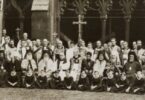
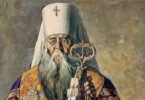
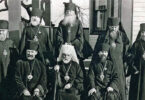
OK . . . so, why the quote from ‘Orthodox Christian Witness’? To prove how ridiculous the ‘Panteleimon group’ was . . . or to question the MP’s practice of communing Roman Catholics at that time? Well, you know, the ‘Orthodox Christian Witness’ WAS a publication of the Russian Orthodox Church Outside of Russia-and certainly no one was censured for THIS particular article . . . Aren’t there still MP Hierarchs who are ‘disciples’ (or at the very least proteges) of the late Metropolitan Nikodim? How do they now look at Metropolitan Nikodim’s pivotal role in having the MP agree to commune Roman Catholics way back in 1969? It would be interesting to know . . . And, also interesting to know would be how does the Russian Church Abroad look at that historical incident now? Or would it be better not to ask EITHER question?
Michael,
So good to hear from you! Indeed Christ is Risen!
OCW was the only source for the English translation of this decree. It’s a supplement to my article on 19th Canon of Timothy. Thank you for your comments.
Fr. Andrei, I cannot locate your article on the 19th canon of Timothy on the Rocor Studies website. Is it available in English? In Christ, David
Hello, Father David-
Yes. This article is available on this Web site.
I was at the 1971 Sobor, with Archbishop Nikon whose helper I was. On the evening of the day this all took place, Vladyka told me the details of what had happened. This new, stricter rule was introduced by then-Protopresbyter George Grabbe, at the request of the Panteleimonites whose influence he had come under. It was not the work of any of the bishops, and as I wrote, Archbishop Afanassy firmly stated he would not accept it, but that in his diocese, the old rules, as printed in the Trebnik, would remain in effect (as they still do in the Russian Orthodox as a whole). As a result, from then on, Chrismation was considered the minimum, but reception by Baptism, other than in those cases where it would have been obligatory before, was optional.
The following summer (of 1972) I was the godparent of a young man who was received from Lutheranism by Chrismation, with the blessing of Vladyka Nikon.
You might want to edit that much into the note of mine that you have published.
One should also note that up until his retirement in 1986, Bishop Gregory (the former Fr. George Grabbe) and his daughter Anastasia Georgievna, were in full control of all public announcements made in the name of the Russian Orthodox Church Outside Russia. Ironically, in this book “The Church and Her Teaching in Life” (Церковь и Ея Ученiе въ Жизни) Fr. George had himself presented a strong and convincing argument in support of the Russian Church’s reception of converts from specific groups, by Chrismation or by Confession and Profession of Faith.
A certain priest (I believe now reposed), whose name we will not mention,
had heard of the stern new rules that the Panteleimonites tried to impose
on ROCOR at the 1971 Montreal Sobor of Bishops (the move was in fact
defeated there, because the seniormost hierarch by ordination, refused to
accept it) — a stricter rule by which all converts must be received only
by baptism.
Therefore he began refusing, not just to perform “mixed marriages”, but to
receive, by baptism or otherwise, any converts from outside the Orthodox
Church. He went beyond that, by also refusing to baptize infants unless
both parents were Orthodox. As a result, more than once I have met with
Russian people who think a baby cannot be baptized if either of the
parents was not Orthodox.
The result was not hard to guess: most of the mixed marriages still took
place, but since the only local Orthodox church refused to perform them,
the weddings had to take place, either by travelling to a place where
there were other Orthodox churches that were less “strict”, or in another
denomination (by far easier, especially when people were not that close to
the Church), or simply at “city hall” — and either of the last two
alternatives would lead to the Orthodox party being excluded from
communion. In any case, the result was not to cement the family in
Orthodoxy, but literally to force them out of the Church.
We must be strict with ourselves, and firm in our commitment to the
Orthodox faith, emulating the Apostles in bringing people to the True
Church of Christ, rather than imitating the Pharisees in making the rules
more important than their purpose.