From the Editors of Historical Studies of the Russian Church Abroad
Archbishop Seraphim belonged to the generation of Russians who managed to leave Soviet Russia during the New Economic Policy (NEP). A number of people were able to find themselves abroad, reunite with their relatives, and thus, likely, survive.
I first met him in the winter of 1990 in Lyon, where he served as the celibate priest Igor Doulgoff. At the time, I was visiting Protodeacon Ivanoff-Trinadtzaty. Later, when I was editor of Pravoslavnaia Rus’ [Orthodox Russia], I received many letters from Archbishop Seraphim. I hope they’re preserved somewhere in Jordanville. His postage calculations were always visible on the envelopes: he personally weighed each letter and precisely determined how many stamps needed. This frugality especially reflected his experience as a Russian refugee—a trait often found among Russian émigrés in France.
For many years, Archbishop Seraphim edited the “Bulletin of the Western European Diocese.” He printed it himself, cut out photographs, created collages, and then rephotographed them. It was a true refugee’s labor—modest, painstaking, and almost entirely handmade. Archbishop Seraphim remained faithful throughout his life to the Russian Church Abroad, which was born in exile.
The last time we saw each other was at Lesna Convent in December 1999. When, in 2001, a period of change began with the election of Metropolitan Laurus (Shkursla) as First Hierarch of the Russian Orthodox Church Abroad, a number of Archbishop Seraphim’s clergy went into schism. This was a true catastrophe for Archbishop Seraphim, and he retired. Soon, a collection of periodicals from the Western European Diocesan Administration, which Archbishop Seraphim had disbanded, arrived in Jordanville. The impression was that he saw no future for the Western European Diocese of the Russian Orthodox Church Abroad.
That’s why the interview with him, published in the magazine “Russian Pastor,” is especially important. The very appearance of this magazine, on the eve of the millennium of the Baptism of Rus’ in 1988, was a major event. It was founded by Archpriest Peter Perekrestov as a communications outlet for graduates of the Holy Trinity Theological Seminary. I remember well the strong impression the first issues of “Russian Pastor” made on me: when I was still living in the Soviet Union, these magazines became a window into another world. I first encountered them through Zoya Alexandrovna Krakhmalnikova.
This interview clearly demonstrates the value of the magazine “Russian Pastor” as a source on the history of the Russian Orthodox Church Outside of Russia.
Protodeacon Andrei Psarev,
September 19, 2026
From the editors of Russian Pastor
We offer our readers an interview given to “The Russian Pastor” by His Grace Archbishop Seraphim of Brussels and Western Europe, who resides at the Lesna Convent in France. His Grace Seraphim (secular name Igor Doulgoff) is distinguished not only by his keen intellect and erudition, but also by his extensive pastoral experience, his special gift and ability to attract children and youth to the Church of Christ, and his sense of humor. In the accompanying interview, His Grace not only directly answers the editor’s questions but also adds many of his own fascinating recollections and thoughts. Thus, this publication is not so much an interview as a reflection, through His Grace Seraphim, of an entire era, the history of the Russian diaspora in France.

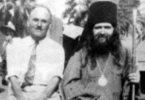
The First Hierarch of the Russian Orthodox Church Outside of Russia, Metropolitan Philaret (1964-1986), avoided air travel and preferred to travel by sea. In the first photo, Father Igor meets him at the train station in Marseille in 1965. In the second photo, Archbishop Seraphim of Lesna and Western Europe
Tell us, Vladyka, a little about your childhood.
I was born in Russia during the Soviet era, but left with my mother in 1928 (my father was already abroad). My future destiny, especially my spiritual destiny, could have been completely different if I had remained in the USSR. I often ask myself what I would have become if I had not left the Soviet Union. It’s not that my parents were religious—I have no recollection of whether they taught me to pray or whether I attended any church as a child. I know I was baptized, since my godfather was I.K. Grigorovich, an admiral and former naval minister who died in exile in the south of France. But I never met him. Once abroad, my mother took me to church, I think once a year, for Easter! However, later, in Paris, they took me more often. I remember a well-known pastor in Paris, Father George Spassky (+1934), preaching on Annunciation Day. I didn’t understand the content of the sermon (I was about eight years old), only a few phrases, but I remember that many people in the church were crying. Even before arriving in France, in Berlin, where we first lived, when I was about to begin my studies at a Russian gymnasium, my mother approached the cross after the liturgy and asked the priest to bless me, a boy, for the beginning of my studies. He blessed me, said something warm, and gave me a red egg. Apparently, someone had given it to the priest shortly before me.
I’ve dwelt on this detail for a reason. It’s an example of how important it is for a priest to pay attention to a child, to give them a cross, an icon, a book, and to say a few kind words. This will leave an imprint on the child and can later, like a seed sown in the ground, bear fruit. I mean, of course, that this isn’t done “with a purpose,” so to speak, but as a sign of genuine love for the child—”I’m pleased to please a child!”
This was very well defined by the remarkable pastor and thinker, Father Alexander Elchaninov, who died relatively young in the south of France: “Why are childhood impressions so important? Why is it so important to fill a child’s heart and mind with light and goodness from the earliest age? Childhood is characterized by the power of trust, simplicity, gentleness, the capacity for tenderness, compassion, the power of imagination, the absence of cruelty and petrification. This is precisely the soil in which what is sown yields a harvest 30, 60, and 100-fold. Later, when the soul has hardened and hardened, what was absorbed in childhood can once again purify and save a person. That is why it is so important to keep children close to the Church—it will nourish them for their entire lives.”
It’s amazing, I was no more than nine years old then, and I asked my mother to buy me a Gospel! I don’t remember the reason why I asked. True, in Russian schools, in the morning, before classes began, there was a common prayer for everyone, students and teachers, in the main hall, where there were Religious Studies (the primary school was taught by a teacher, and only the higher grades by a priest). Perhaps my father’s death had an indirect influence? I remember that in the evenings, after my prayers, I read the Gospel. It was very little, but I regularly set myself to read just three verses!
When my father died, my mother had to work full time, and to prevent me from becoming a street urchin, it was decided to send me to a Russian boarding school, one of several such schools in France at the time. The choice fell on the Cadet Corps, which had recently opened in the suburbs of Paris. This proved decisive for my subsequent religious education. At first, the corps didn’t have a priest, not even on Easter! I remember how on Easter night we would gather in the reception room, the music teacher would sit at the piano, and we would all sing “Christ is Risen” three times, after which we would go to break the fast.
The corps had a fine church, and a priest from Paris came very rarely. Then a priest, a hieromonk, appointed by Metropolitan Anthony (Khrapovitsky), arrived from Serbia. I remember being overjoyed when I learned that services would now be held regularly.
The younger cadets took turns serving. Then, along with four or five others, I became a permanent altar boy. I really enjoyed serving. A senior cadet served as psalm-reader, and when he left, the rector trained me. I began (reluctantly, I preferred serving) to read at all the services, even though I was only 11 or 12 years old at the time.
I never saw a bishop’s service until, much later, I became one of the acting subdeacons in the Cathedral of Metropolitan Seraphim (Lukianov) in Paris.
When did you decide that you wanted to become a priest?
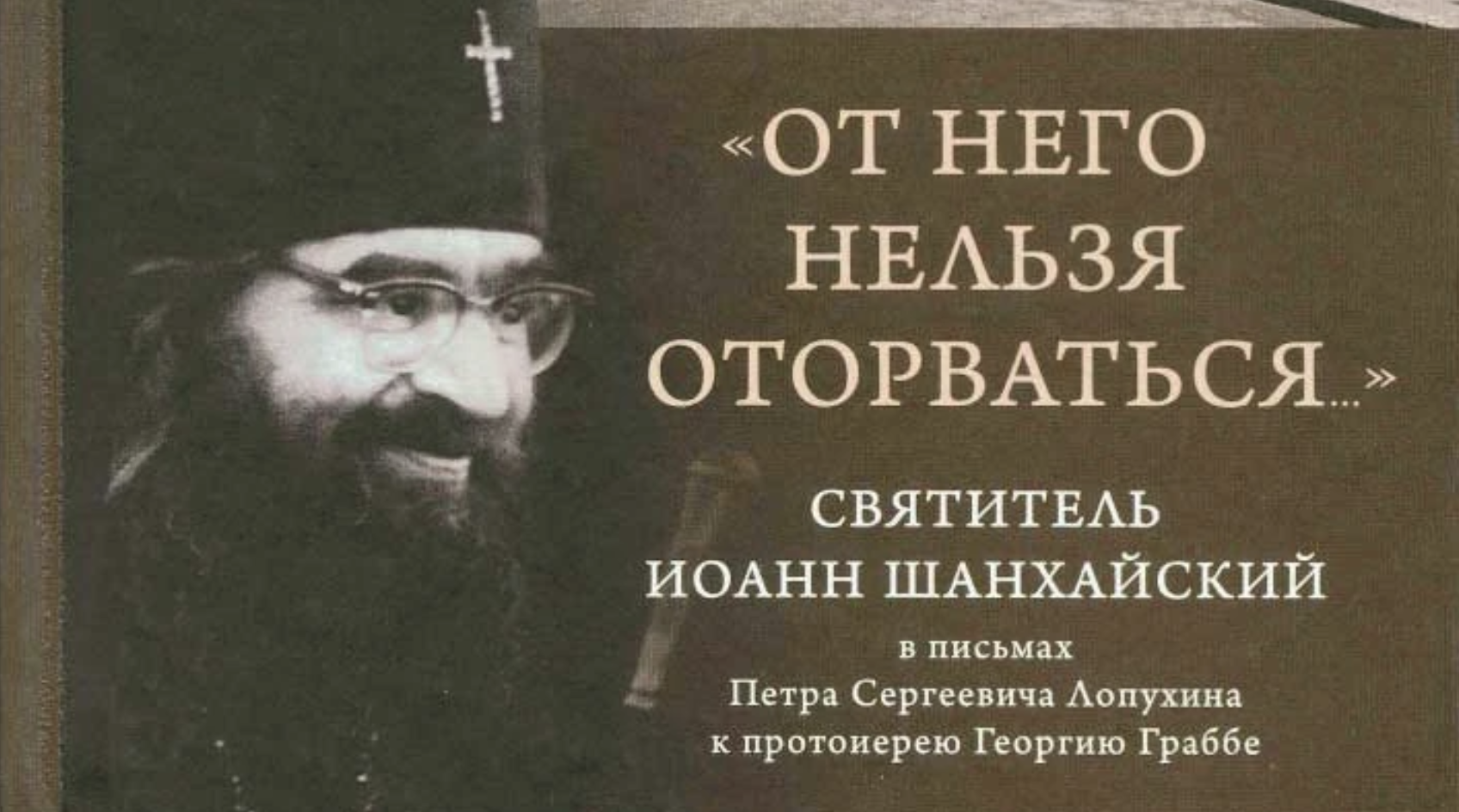
I’ve always been close to the Church, or more precisely, to the Russian Orthodox Church Outside of Russia. When, after World War II, we lost our only church in Paris, I, then a young man, actively participated with others in organizing temporary services—during Holy Week and Easter, and also on exceptional occasions, such as the reception in Paris of St. John of Shanghai, who had been appointed here. Otherwise, having arrived in Paris, where the bulk of his flock was, he would have had nowhere to serve.

Present-day interior of the Church of the Icon of the Sign of the Mother of God, located inside an apartment building. It now serves as the Russian parish of the Ecumenical Patriarchate. Photo: (https://frenchparis.ru/eglise-notre-dame-du-signe)
After completing my secondary education, I enrolled in a French engineering school, where I studied for a year or two during the war. Then I spent time in Germany, and when I returned, I no longer wanted to continue my previous studies. I decided to enroll (in 1946) at the St. Sergius Theological Institute in Paris, commonly referred to as the “St. Sergius Representation,” from which I graduated in 1950 with a first-class diploma, having submitted my dissertation for approval.
After graduating from the Institute, I worked in my field at two French companies, even though I never had an engineering degree. Back then, people were happy to hire you even without a degree, as long as you had the knowledge. Nowadays, it’s hard to find a job in France even with a degree!
I was, among others, in correspondence with the late Archbishop Seraphim of Chicago, and in every letter he chided me for being among the “gray” clergy. This is what he called those who had a theological education (in my case, even a higher one) but did not become priests.
Archbishop Seraphim, in the rank of archimandrite, headed the missionary monastery of St. Job in Carpathian Ruthenia. It seems that in 1935, it was decided that Monk Job would visit the entire diaspora (at least Western and Central Europe) with the holy relics of the Holy Great Martyr and Healer Panteleimon (received by the monastery from Mount Athos). Much later, Monk Job became an archimandrite and, after the last war, he headed the same monastery of St. Job, but evacuated to Munich. His missionary journey was successful; he visited numerous churches, parishes, schools, and societies. He spoke of St. Panteleimon, whose relics were venerated, and of the Joblev Monastery in the Carpathians, introducing the life and work of this missionary monastery to the émigré community in Europe. Father Job also served in the cadet corps. Then, all the students received an icon of St. Panteleimon as a blessing from him, which each one attached to their bed. It was the first time I saw a piece of the holy relics! And the image of the Healer was imprinted on me for a long time. Every spring afterward, I suffered from pleurisy and pneumonia. There was no penicillin at the time, and this could have been fatal. During one of these anxious moments, our religious teacher hastily wrote to the Carpathians asking for an amulet, a small medallion with the icon of the Sign on one side and the Great Martyr and Healer Panteleimon on the other. Since such a medallion was unavailable at the time, they sent two separate ones, which I wore all my life until a thief, apparently an Arab, stole them from my church apartment in Lyon, thinking they were valuables!
How did I become a priest? Everything remained the same until I came to this conclusion myself! Why? I felt a certain dissatisfaction with my life, my occupation, my purpose. Working at the factory (in a large, bright room, alongside draftsmen) didn’t burden me, materially or otherwise. But a feeling of emptiness emerged. There’s a funny, somewhat crude French expression: bouleau, metro, dodo. Basically, go to work, work, take the metro (underground), then come home and, tired, fall asleep. And the next day, the same thing all over again. No purpose, just emptiness.
I think my state and aspirations back then were perfectly summed up by the same Father Alexander Elchaninov I mentioned earlier: “What a Joy to Be a Priest! The priesthood is the only profession where you live your life seriously all the time.” Of course, the term “profession” is relative here—Father Alexander simply wanted to compare the priesthood to some other profession! That’s exactly how it turned out for me.
Yes, such a meaning of existence, a real purpose, a true essence, has become crystal clear within me. This doesn’t mean that being an engineer, a doctor, a scientist, a craftsman, a farmer is pointless, but I’m talking about myself then.
When I came to the realization that I needed to become a priest, I longed for it to be fulfilled as soon as possible. I was ordained a deacon in Geneva, but for Cannes, to assist the elderly, venerable rector, Mitred Archpriest Nikolai Sobolev. He suffered from severe asthma, making it difficult for him to breathe, and serving and moving were difficult. I wanted to remain a deacon as long as possible, but my future superior was unwilling—he needed a priest. So I found myself in the south of France, in Cannes, where I served for a quarter of a century.
Which professors from the St. Sergius Theological Institute in Paris remain imprinted in your memory?
I would like to single out Professor Archimandrite Cyprian (Kern). Many knew him from Belgrade, and he later served briefly as Chief of the Mission in Jerusalem. I single him out not only for the engaging nature of his lectures (patrology, liturgics), but also as a versatile scholar. You could discuss any topic with him. The Institute’s students were once taken to the Louvre in Paris, and Father Cyprian accompanied us and beautifully explained the secular paintings and other exhibits in the Paris museum.
The renowned émigré writer Boris Zaitsev regularly visited Father Cyprian—they were both interested in aesthetic themes—Italy, of course, Byzantium, painting, and poetry. But the writer also visited Father Cyprian on personal spiritual matters. Later, in one of his essays, under a different name, he featured Archimandrite Cyprian as one of his characters.
There’s a saying: show me what books you have, and I’ll tell you who you are. I’ll rephrase that saying: show me what portraits (paintings) you have in your room, and I’ll tell you everything about you! I recall that Father Cyprian had only two portraits hanging in his small office: a photograph by Archimandrite Antonin Kapustin and an engraving by the famous Yuryevsky monk Archimandrite Kassian Bezobrazov (who later became a bishop). As a tonsured monk of Mount Athos, Father Kassian wore a klobuk of the Athonite style. He was an exceptional expert on the New Testament and knew Greek perfectly. Remembering the custom of Metropolitan Anthony (Khrapovitsky), where students would gather informally once a week in the evenings to drink tea, debate, and ask questions (so many future pastors and thinkers were shaped by such tea parties)—aware of this, Archimandrite Cassian, later Bishop of Catania (from Catania, a city in Sicily that the Ecumenical Patriarch considered his province. I recall one less-educated deacon pronouncing it “KOTansky”—from the word “cat,” perhaps?) also began organizing tea parties. We would go to his place, each with his own chair or stool—he lived modestly and cramped—but nothing came of it in the sense of simple, easy conversation. It was strained; we tried to talk, but without enthusiasm. He turned out to be not exactly aloof, but a professor, a scholar in his own right, a specialist in his field, and nothing more.
In issue #32 of “Russian Pastor,” there was a photograph of I. M. Kontsevich, one of the professors at Holy Trinity Seminary in Jordanville. I knew him well in Paris and visited him. We studied together at the Theological Institute. His famous book, “Acquisition of the Holy Spirit in the Paths of Ancient Rus’,” was his PhD thesis, written under the supervision of Professor A. V. Kartashev. In his preface, the author thanks his professor for his “lively interest in the subject and for his rigorous criticism.”
I also remember Mikhail Mikhailovich Osorgin. He held two jobs simultaneously: he taught church rules and served as a psalm-reader at the parish of St. Sergius Metochion. Since we had daily services—academic ones in the morning and parish ones in the evening—Mikhail Mikhailovich often sang the entire service of Vespers and Matins alone. With touching meticulousness, he was always afraid to miss any given evening service for any reason, as if he were afraid to “offend” some saint whose memory was being celebrated that evening. Mikhail Mikhailovich Osorgin was a great connoisseur of church singing, and somewhere there is a recording of his reading of the paremia of Good Friday, “The Prophecy of Ezekiel.” He also set this reading to music.
Who influenced you spiritually and was a model for your pastoral ministry?
There wasn’t a single pastor or archpastor who had a fundamental influence on me. Like a bee, I fed on the spiritual nectar of many, and each one undoubtedly gave me something of themselves. I remember with gratitude all who preserved our youth.
I learned a great deal in the Cadet Corps, from various professors at the Institute, and from Bishop Nathanael, to whom I served as a subdeacon. I also remember with gratitude my superiors in Cannes (although I was more theologically and ecclesiastically educated), who nevertheless gave me much useful guidance. I recall Archimandrite Sergius (Pfefferman) of Meudon. His spirit, sacrifice, authority, and even his confession at three points in his life made him not only worthy of deep respect but also a role model. I would like to recall his three confessions: first, when he was baptized as a young man and subjected to persecution by his Jewish family; then, during the last war, during the occupation, as a born Jew. And finally, after the war ended, during the period of Soviet fever here in France, and especially in Paris—when absolutely all parishes in France submitted to Moscow, with the exception of just three or four parishes of the Russian Orthodox Church Outside of Russia, including Father Sergius’s parish in Meudon, which was located not somewhere in the provinces but in full view, practically in Paris. Although Archimandrite Sergius and the aforementioned Archpriest Nikolai Sobolev did not study at a theological academy, they graduated from the “academy of life”—they had extensive experience and knowledge that not everyone would gain at the academy!
And, of course, I owe a lot to the ever-memorable Archbishop of Geneva Anthony (Bartoshevich) – the clergy under his omophorion felt confident, calm, wise and respectable – and comfortable too!
I read a lot about our pastors and archpastors, and now, in my old age, I love reading the memoirs of pastors and archpastors of the recent past, and, of course, my more or less contemporaries. As a child, I loved reading the Patericon and the Lives of the Saints. All this, of course, was not wasted.
When you were studying at the St. Sergius Metochion, were you a member of the Russian Orthodox Church Outside of Russia? If so, how were you treated there?
I belonged to the Church Abroad both before and upon entering the Theological Institute. Had I entered, I would have had a recommendation from a priest abroad, although I could have had one from the institute’s fellows, with whom I was well acquainted. During my four-plus years of study, I behaved completely correctly toward my superiors, and no one exerted any pressure on me. To make this clearer, it’s worth remembering that it was the post-war period, when both our Diocese Abroad and the Greek Exarchate (those known as “Evlogians”) categorically rejected the Moscow Patriarchate.
When news arrived that the Exarchate (after the death of Metropolitan Eulogius, who had brought everyone into the Moscow Patriarchate) had succeeded in getting rid of Moscow, Archbishop Nathanael wrote the following about it:
“Despite the differences in our understanding and the current state of the church, we sincerely rejoice for His Grace Archbishop Vladimir and his newly assumed title of Exarch… It must be borne in mind that the charter had been long awaited, but was received only in March 1947. (I will nevertheless provide some background information. In the autumn of 1944, Metropolitan Evlogy, through the Soviet ambassador, entered into correspondence with the Moscow Patriarch and declared his readiness to immediately reunite. He did not inform anyone in Paris of this. Thus, against the will of the majority of his clergy, they found themselves near Moscow and were freed from this only after the death of Metropolitan Evlogy in August 1945.) In accordance with his written will, his vicar, Archbishop Vladimir of Nice, assumed control. It was he who, with the support of the majority of his flock, succeeded in breaking away from Moscow.”
I’ll also add that Archbishop Nathanael, appointed to Western Europe by our Synod, not only immediately visited Archbishop Vladimir and the St. Sergius Metochion (he was received by all the professors), but he also assisted Bishop Vladimir, who soon became Metropolitan. In May 1947, a Youth Congress was held at the Russian Boys’ Dormitory in Verrières, and the Liturgy was celebrated with the two bishops. Later, Bishop Nathanael, now alone, served a moleben, assisted by clergy from both jurisdictions. Our Saint John also visited Metropolitan Vladimir several times when he arrived in France, and after Christmas, he sent cadets from the Versailles Corps to sing carols to him, a task Saint John had assisted until its closure.
This was the period when Professor A. V. Kartashev of the Sergius Metochion republished in Paris the brochure “On the Soviet Church,” which had first been printed in Germany, adding his own preface and an indication that this important human document came from circles close to Metropolitan Anastassy, a document that beautifully conveys the essence of the “Soviet” Church.
At the same time, Kartashev wrote to Metropolitan Anastassy in Germany, declaring that it was time to forget the espoused Sophian heresy and fearlessly send students from Germany to Paris! It’s worth noting that at that time (due to the war), just when I enrolled, even though the faculty was fully staffed, there were very few students. I remember that only Serbs (from camps in Germany) arrived.
For the sake of completeness, I would like to recall the following. Mother Ekaterina, Abbess of the Lesna Convent in Hopovo (Yugoslavia), known as Countess Efimovskaya, died in October 1925. During her final illness, she often dictated her thoughts to her cell attendant, Sister Zinaida. When it became clear that the end had come, she called out to Sister Zinaida with her eyes and said in a weak voice, “Send everything I dictated to Zander in Paris.”
Lev Alexandrovich Zander was also my professor at the St. Sergius Metochion. He taught logic and other subjects. True, the abbess of the Lesna Convent died in 1925, and Metropolitan Evlogy only finally broke away from the unity of the entire Church Abroad in 1927. But already in 1924, relations between Paris and the Synod in Belgrade were severely strained.
I would like to say a few more words about the aforementioned Metropolitan Vladimir. To make a final break with Moscow, he needed to obtain the conciliar opinion of his pastorate. To this end, an emergency diocesan congress was scheduled for October 16, 1946, which gave Vladyka the confidence and authority to act. At the beginning of the congress, various greetings were read from several autocephalous Churches. Greetings were also received from the American Metropolia, which had already broken with the Church Abroad, and from our Synod of Bishops in Munich—in the name of Metropolitan Anastassy. This telegram of greetings was signed by Archbishop Seraphim, the future Bishop of Chicago. The congress resolved to respond with gratitude to all who sent greetings. At the insistent request of those gathered, the reply to Metropolitan Anastassy was to be composed in particularly warm terms.
Archbishop Leonty (the future Archbishop of Chile) also visited Paris while traveling from Germany to South America. He possessed a beautiful voice. I remember that when he entered the Podvorye church, he sang the majestic Magnification of St. Sergius.
I think that after all the examples I’ve given, my answer to your question is exhaustive. There were no problems.
However, for those readers of this magazine who remain impressed by the reputation of the Sophian heresy in Paris, I would like to quote the words of a professor—I’ve forgotten who, but I know it was Archimandrite Cyprian who quoted them. I’ll formulate the meaning of what he said in my own words: what is true heresy? It is a living false teaching that permeates every structure of the Church’s organism. All that remains of Father Sergius Bulgakov’s teaching are dusty volumes sitting on shelves somewhere. Father Cyprian added that this was said as if in defense of Father Bulgakov, but he was terribly offended!
During more than four years of study, none of the students (Bulgakov died during the war) heard anything about his teaching from the department.
No, it wasn’t Sophianism that was at issue, but something entirely different. Like a bolt from the blue, Professor A. Kartashev’s speech, “Old Testament Biblical Criticism,” delivered in February 1944, called for a different approach to Holy Scripture, for biblical scholarship to be developed through a “critical method.”
When this lecture was published as a book in Paris in 1947, it was subjected to a scathing critique by Bishop Nathanael. His lengthy, scholarly, and detailed article on the topic boiled down to the assertion that the questions raised by the venerable professor were interesting, but that, despite all the reservations he made, the Orthodox reader would never agree with his conclusions. Even though the issues raised could be discussed in a calm, private setting, and nothing more! Bishop Nathanael’s article is easy and engaging to read, like everything else that comes from his pen. Everything is understandable, even if you haven’t previously read Professor Kartashev’s book.
But again, even though his speech was public, even though the book was published in Paris in sufficient print runs, it remains, it seems to me, the domain of that same dusty shelf! As far as I remember, in his Old Testament lectures (the professor was someone else), this wasn’t reflected in any way. And how it is now—I don’t know.
To some extent, Professor Bishop Cassian (but, as many students have noticed, before his episcopacy) in his lectures on the New Testament paid more attention to the authority of the Tübingen German scientific school than to the Holy Fathers!
For Archimandrite Cyprian, who held his colleague’s scholarship in high regard, the authority of the Holy Fathers was paramount. I remember the following episode. The students studied in the evenings either in the classrooms or in the dormitory underneath, where it was warmer. There was still no coal, so we heated ourselves with a special stove in the dormitory, which required filling with sawdust.
Father Cyprian, apparently tired from his night of scholarly work in his office, would go down to the students’ dormitory to clear his head. He was pleased to see anyone studying diligently, but he also enjoyed conversation. Sometimes he would launch into an impromptu monologue on some unexpected topic. For some reason, the conversation turned to the Holy Fathers, and Archimandrite Cyprian began enthusiastically to speak of their authority. The dormitory ceiling was supported by two columns, pillars. Leaning against one of them, as if embracing it, Father Cyprian concluded: “Yes, one can and should always lean on the Holy Fathers. They are unshakable pillars.”
What spiritual giants have you met in person or read about?
I hasten to mention the name of Metropolitan Anthony (Khrapovitsky). No, I never met him, but I read a lot about him, and most importantly, people who knew him personally spoke well of him. Although I was about 12 years old at the time, I was struck by this personality, at first, of course, in a childish way. I knew a relatively young émigré military historian, Kersnovsky. He had been to the cadet corps, attended many services, and prayed with us. Apparently, he noticed the boy there, serving as an altar boy and even reading in the choir. And so he gave me a collection of Metropolitan Anthony’s selected works, which had just been published in 1935 to mark the 50th anniversary of his priesthood. Of course, the articles weren’t for a boy (for example, “The Moral Idea of the Holy Trinity,” “Psychological Data in Support of Free Will and Moral Responsibility”), but at the beginning of the book is a fine photograph of the Metropolitan—he sits adorned with crosses, panagias, and medals (which he wore, of course, only for the photo; he disliked medals, as they seemed too secular…), such a venerable Metropolitan, smiling affectionately… Later, in my mature years, I admired not so much Metropolitan Anthony’s theology, but rather Metropolitan Anthony personally as a person, a saint, an archpastor, even a public figure (however, this never went beyond the bounds of something non-ecclesiastical). As is well known, there is now a major work (17 volumes) about him by Archbishop Nikon (Rklitsky). I always regret the unfortunate title of this work, which greatly limits its significance. I would suggest! The future publisher received this title: “Metropolitan Anthony Khrapovitsky and His Time (1863-1936).” Yes, this is a broad range of his era: before the First World War, before the Revolution, the Civil War, the great exodus into emigration, a broad view of the entire emigration and church activity.
In these 17 volumes, I am most touched by the Metropolitan’s Epistles, his diocesan Decrees, which have broad significance, and simply by the articles on a wide variety of topics…
Incidentally, I supposedly had a “meeting” with Metropolitan Anthony, but many years later. I think a future chronicler will find this interesting. The great abba died long ago, but his belongings remain… In the whirlwinds of war, the Red Army invasion, and the new emigration from Yugoslavia, it seems difficult to preserve anything. But something has survived.

Igor Doulgoff (in a white shirt) meets the nuns of the Lesna Convent who arrived in Paris from Yugoslavia in 1950.
When I unexpectedly became a bishop, it coincided with my move to Lesna Convent, where I was supposed to go anyway as a priest, as if “to retire.” But things turned out somewhat differently. I became a bishop. In the monastery church, a chair was reserved for me on the left kliros, where I could stand and pray when not serving. Next to the chair is a small table on which, to this day, I can place my liturgical books so I can follow the prescribed readings and singing. Over time, I began to sit often, even at inappropriate times… I had long been eyeing the chair they had assigned me—wide, comfortable, but with some kind of iron rods at the ends. One day, I asked the abbesses or elderly nuns what kind of chair it was. It turns out that there used to be wheels underneath, so that someone could move it while sitting. And then it turned out that this chair belonged to His Beatitude Metropolitan Anthony! As his biography indicates, in his final years he was often elevated on a chair, where he would preach while seated. So it turned out that I, unworthy as I am, was forced to sit in His Beatitude’s chair. How did this chair end up here? I remember when the entire monastery moved from Tito’s Yugoslavia to France, the nuns took everything they could, down to the last teapot, so to speak! They were traveling into the unknown, unsure of what would happen to them, how they would live. I remember when their convoy arrived at the Paris train station, we spent a long time transporting all their “property.” First and foremost, of course, were the sacred relics—the Lesna Icon, other icons, books, vessels, vestments, and so on. Among them was the chair, the throne, of the revered and beloved Abba.
What advice can you give to aspiring priests?
Several textbooks on pastoral theology offer excellent advice. Among these works is Professor Archimandrite Cyprian Kern’s book, “Orthodox Pastoral Ministry,” which was first published in Paris in 1957 and has now been reissued in Russia. There are several other excellent works, both previously published in Russia and more recently. Recently, the unforgettable Archpriest Lev Lebedev’s “Notes on Pastoral Theology” was published. I know of many living pastors who lecture on this topic or speak at meetings… It seems to me that a young candidate for the priesthood (and I don’t necessarily mean young in age) would do well to familiarize himself with pastoral theology from a variety of sources.
In all such works and in other respectable authors, much advice is given to novice priests.
I can only advise heeding, if not cynical, then at least this rather simplistic advice to a young priest. Whose? Surely not Metropolitan Anthony’s—that sounds like him. Something along the lines of: “Serve, pray, perform the services reverently, and don’t be too clever!”
If the last two words are taken to mean advice to do nothing, not to rise with humility “from strength to strength,” then perhaps we’ll be told that then there wouldn’t have been such a pastor as St. Righteous John of Kronstadt. But the point is, it’s not fitting for a young pastor to think he’ll become a “Father John of Kronstadt.” So don’t get too clever, don’t think too much of yourself, thinking you’ll accomplish such great things right away! Don’t get too carried away. Everyone will appreciate your worship and your love for the church, and they’ll even overlook any failures if you love God’s church and the services. But if you become arrogant, woe betide you!
How can a new priest be prevented from making potential mistakes? The ever-memorable Archbishop Anthony of Geneva repeatedly said this (and I have always tried to adhere to this opinion): upon receiving an appointment to a parish, never, under any circumstances, establish new rules from the very beginning, even good ones, even if it means correcting some undesirable custom that took root under the previous priest.
On the contrary, treat your predecessor—living, retired, or deceased—with respect and admiration, and sincerely, of course. If you do so sincerely, you will only elevate yourself in the eyes of your parishioners. They will feel their trust in you. And after a year or two, you can carefully, gradually, make changes for the better. And try to present these changes not as your own, but as something developed and deliberated with those same parishioners!
But following a different practice—imposing new rules day after day (like hanging icons more deliberately, rearranging the lecterns, immediately serving strictly according to the typikon, etc.), even if it’s a good initiative—is the wrong path. The priest will complicate his own life and future work, and will confuse parishioners who have become accustomed to a different, established order over the years. And most importantly, it will close off the possibility of establishing something better in the future.
A priest-rector inevitably, in the line of duty, has to say something unpleasant (a well-founded instruction or remark) to one of his parishioners, whether social or personal. Doing so hastily, taking advantage of the fact that the person has come to church, is not advisable. It’s better to specifically visit the person at their home and speak with them in a friendly and unhurried atmosphere. After saying the main point, it’s good to then move on to another topic, share something, ask about work, family, share plans for the parish, and give the person an opportunity to express their opinion on the matter. Such a technique will be much more effective than a brief and seemingly harsh remark.
Priests often experience personal difficulties—overwork, despondency, and a loss of ideological focus. What can help a priest overcome this?
This topic has been thoroughly explored in many works on pastoral theology, but I believe the most effective approach is for the ordaining bishop to warn the candidate in advance, in his conversations with him, of what might happen and what he must be prepared for! At first, there’s usually an uplifting, ecstatic, elevated state, and often overwhelming zeal. Then, inevitably, there comes either a decline or disappointment that things aren’t going as expected. And that’s precisely why you shouldn’t have thought that way! A forewarned priest likely won’t be taken by surprise, but will remember what his bishop warned him about.
A priest can be helped to overcome difficulties by recognizing that even renowned pastors faced similar difficulties at the beginning. Let’s recall, for example, St. Paisius Velichkovsky. In his youth, in his first monastery, he had every reason to fall into despair and give up everything! As a sixteen-year-old youth, the future St. Paisius began his monastic life as a novice. A kind abbot received him, treated him kindly, and consoled him.
The novice feared no work, even the most menial, even the most thankless. He slept poorly at night, and amidst the arduous toil, he never forgot to pray. This was the rapture of his first impulse. He was happy. But misfortune befell the brethren of the monastery there: the good abbot’s place was taken by another, a proud, stern, infinitely demanding, and at the same time unfair man. Almost all the brethren fled. A few remained, those with more patience. Among them was Pyotr Velichkovsky, the future Paisios. But he, too, endured and endured, until it became unbearable for him too. His patience wore thin, despondency set in, and he decided to flee the monastery. He went into the church one last time, prayed, asking the Lord to forgive him and his offender. And then, with a knapsack over his shoulder, he fled. Then he joined another monastery in Russia, then another, and finally settled on Athos, where news quickly spread about the young hesychast, whose life was adorned with wondrous feats… Thus, “from strength to strength,” the future great elder Paisios grew, along with temptations.
Now let’s imagine that he had given in to his despondency, had “given way” to his difficulties, though ultimately they were temporary! Had he abandoned everything, we would not have the great Elder Paisios, nor his remarkable contribution to the spiritual treasury of the Church…
So, when the first sorrows appear in a young priest, which, if not stopped, can greatly harm his future pastoral work – give way to such despondency, after the first delights and upliftment…
But many sad things in the parish, which initially seem fundamental, important, paramount, will be forgotten in a year, or maybe even less, and not even remembered.
But a priest doesn’t have a stubborn, evil abbot in his parish, like Pyotr Velichkovsky. The role of the evil abbot is more than compensated for by… some parishioners, especially when the parish is small. Among a thousand parishioners, two or three such parishioners disappear into the crowd. But in a small parish, they can occupy an important place. Let them remember the harm inflicted on the young future elder by a stubborn abbot and reflect on the responsibility they take upon themselves, complicating the already difficult life of a priest in our time.
What educational principles do you use to build your relationships with children and young people?
I am by no means an “expert” on this issue. I recall a wonderful report on the education of youth given by our Bishop Anthony of Geneva: “Our Change” (published in “Russky Pastyr” No. 10/1991 – ed.). Recently, Archpriest Vladimir Morin also addressed this issue quite exhaustively in “Russky Pastyr” (Nos. 33-34/1999). But I will still say that I try to adhere to the principle of taking every young person, teenager, even child “seriously.” Young people and children often write to me, and I respond to them thoroughly and quickly. I try to respond in their tone; I often embellish my letters either with clippings or simply include in the envelope something that I think might be of interest to them. There must be personal contact (not a formal reply), but one must not write “from the heights of one’s episcopal rank.” I answer all their letters—the “trifling” ones (I don’t consider wasted time wasted) and the very serious ones, in which young people ask questions that concern them—they ask them with complete trust. One writes from faraway lands, worried about the Church Abroad’s cautious attitude toward the Ukrainian Church. It turns out his grandfather there was a Ukrainian priest. So, I had to explain that there is no such thing as a unified Ukrainian Church, and there hasn’t been one for the past 50-60 years. So, it’s clear that certain groups require careful consideration… I had to write in a style understandable to a teenager, maybe two or three pages long…
A 15-year-old boy studying at a French Catholic college shared that his classmates were harassing him because he “crossed himself backwards.” Here, I had to again respond at length, stating that the question of who crosses themselves correctly and incorrectly is a double-edged sword. For example, I reminded him that the early 13th-century Roman pontiff, Pope Innocent III, in his work “On the Mysteries of the Holy Altar” (found in the famous volumes of Migne), details how one should cross oneself and why, and then adds a way to cross oneself that is unnecessary because it is incorrect. So, this authority on Roman Catholics, in the early 13th century, dictated that one should cross oneself exactly as we Orthodox do to this day! And he condemned the manner of crossing oneself that Roman Catholics do today.
Children’s confession is very important; a specific approach is needed… I think every parish priest, as they get to know their flock better, eventually develops their own practice. For beginners, well, limit yourself to simple questions and not so much advice. What’s published, for example, in Bulgakov’s “Handbook” is not at all bad, it’s not outdated—”Questions for the Confession of Youths” and also separately: “For Minors.”
I’ve never strictly defined “over or under seven” as a category. Some children can already approach confession at six and a half, while others at seven and a half are still a veritable child! But what I definitely don’t do is pry into intimate aspects of teenagers’ lives or behavior. Limit yourself, when necessary and if you see fit, to advice like, “Keep in mind that this and that shouldn’t be done and why,” without questioning or interrogating the children at all.
Sometimes a teenager, seeing that confession isn’t an Inquisition tribunal, and the priest isn’t a judge-inquisitor but a “doctor” and friend, will tell them themselves, without fear and with trust, what’s needed. I know of several cases where inexperienced priests, following Roman Catholic practice, began to extract every last detail from teenagers, after which such teenagers refused to go to confession altogether…

In 1960, a mansion on Rue Claude-Lorraine in the 16th arrondissement of Paris was purchased for the parish, and on December 25, 1961, Saint John (Maximovich) and Bishop Anthony (Bartoshevich) of Geneva consecrated it as the cathedral of the Western European Diocese of the Russian Orthodox Church Outside of Russia. Saint John lived here until his transfer to San Francisco in 1963. The church was painted by artists from the Parisian society “Icon,” and the second floor now houses memorial rooms for the saint. Archpriest Veniamin Zhukov served as rector from 1990 until he was suspended from priesthood by the Synod of the Russian Orthodox Church Outside of Russia on April 26, 2001, along with several other clergy of the diocese. Ultimately, following the schism, the Russian Church Abroad lost this memorial church.
In conclusion, what are your wishes for the readers of “Russian Pastor”?
The following is not for all readers, but for those who complain about certain modern difficulties in church and spiritual life. Some complain about the language of services: “Why does the priest use the local language of the country during services?” Others, on the contrary, lament: “Why is there so little in the local language! Our children, and we for that matter, don’t understand the readings, the singing in church, or the sermons.” Some dream of nothing but a transition to the civil calendar: “Our children can never attend holiday services; why create such difficulties for us?”
Pilgrims from the former USSR have begun to come frequently to the Lesna Convent, and they learn here for the first time about the Russian Orthodox Church Abroad, Sergianism, and so on: “Oh, what a hardship for us! We’ll be returning home later, so what should we do? Why such complications? Wouldn’t such-and-such be simpler?” Others find the Orthodox Church’s fasts a burden, and the fact that marriages aren’t permitted on all days a burden… What else isn’t a burden?
In short, everything is difficult! It becomes clear what the Apostle Paul warned about: “All who desire to live godly in Christ Jesus will suffer persecution” (2 Tim. 3:12). They will be persecuted not only by force of arms or administrative tyranny, but by the entire environment and conditions of the era in which they live, which, at various times and in various places, have created, are creating, and will continue to create difficulties for Christians, when everything around them persecutes and oppresses those who desire to “live godly in Christ Jesus.” It is not without reason that Christ said that faith in Him is both a “yoke” and a “burden.”
I’ve listed above some of the modern difficulties of following Christ in the so-called “everyday” sense. But that’s not all. St. Seraphim of Sarov spoke of internal difficulties (see his Conversation with Motovilov). That’s how difficult it is to be an Orthodox Christian! And it has always been difficult, both internally and externally. For example, the apostles were persecuted by both Jews and pagans. Then Christians were persecuted by the state. For several generations! If you’re a believer, be prepared to go to the Colosseum and be torn to pieces by wild beasts! If you want to attend the general prayer meeting in the catacombs for the “Breaking of Bread”—that is, the Liturgy—you might be seized!
Several generations of Christians then lived under the yoke and invasion of infidels—Saracens, Turks, Arabs, and Mongols… For centuries, the Church was plagued by heresies and schisms, and it was always necessary (and members of the Church did so!) to choose between the Truth and its absence… And again, it was difficult to be a believing Orthodox Christian! There are still people alive who remember the difficulties for believers under the Soviet regime.
Yes, it’s difficult. It’s always and everywhere difficult. Everything is difficult—faith is difficult, and the commandments are difficult, and all the holidays are difficult, and the fasts are difficult… The whole faith is difficult, the Gospel is difficult, the Lord’s Commandments are difficult… Some burdens seem lighter to some, while others find that very burden to be the heaviest!
Yes, all this is truly both a yoke and a burden!
Therefore, when modern Orthodox Christians for some reason believe that they cannot tolerate any difficulties in practicing and confessing their faith, it is strange to hear. When a modern Orthodox Christian believes that they can be such only if this faith does not “trouble” or “constrain” them in any way, one might wonder whether such a person is really a believer. When a modern Orthodox Christian renounces any effort in the realm of faith, one can again be perplexed. When you hear, for example, that they find it difficult to observe all the feasts, or to hear a litany during services that is not in Church Slavonic, or to celebrate Easter “unlike everyone else,” or, furthermore, to realize that the problem of Sergianism in Russia has not ended, and much else besides, one again wonders: is this really the only thing difficult for them? Is the rest of Christian life really easy? For each of us, everything is probably difficult! The entire Christian year is difficult, the entire life of a believer on earth is difficult! Let’s remember Father Dmitry Dudko (who was a confessor in Soviet times). He once wrote, or explained to his listeners, that “Christianity shouldn’t limit itself in any way; it should become the content of one’s entire life.” And further: “…if your Christianity is only incidental (that is, without difficulties), then such Christianity of yours isn’t worth much…”
“Whoever desires to come after Me,” says the Lord, “must deny himself” (Mark 8:34). “Deny yourself” means discarding or relegating your habits, inclinations, and conveniences to secondary (rather than primary) importance. Personal, family, and social habits, as well as inclinations—the demand for convenience, the unwillingness to make an effort, to sacrifice one’s customs for the good of the Church… Let us remember that being an Orthodox Christian is difficult in general, by this very name alone—and it has been so for 2,000 years!
God bless you, Master!